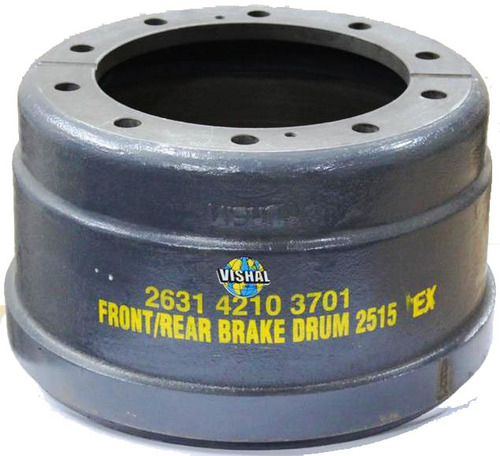
About Rear Hub / Brake Drum for TATA 1210 E & 85 Model
TATA 1210 E & 85 Model
|
Code
|
Description
|
Part No.
|
|
V011
|
Front Hub Steel 85 Model (Gutka)
|
2574 3340 0105
|
|
V012
|
Rear Hub Steel 85 Model
|
2574 3560 0104
|
|
V012A
|
Rear Hub Steel 1210se (TELCO Type) - Old Model with Gutka
|
NPN
|
|
V013
|
Front Brake Drum 'E' & 85 Model Heavy Duty
|
2573 4210 3701
|
|
V014
|
Rear Brke Drum 'E' & 85 Model Heavy Duty
|
2573 4230 3701
|
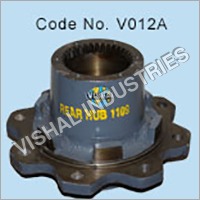
Engineered for OE Precision and DurabilityManufactured according to TATA's original equipment standards, this rear hub and brake drum ensures correct fitment and dependable strength. Precision CNC machining and an anti-corrosive coating guarantee long service life, resistance to wear, and reliable braking in demanding commercial applications. It is purpose-built for heavy-duty axle loads, delivering the durability your Tata 1210 E or 85 model requires.
Seamless Compatibility and Easy InstallationDesigned as a direct OE replacement, this hub/drum assembly matches the original specifications for mounting holes, center bore, and stud size-commonly M22 x 1.5 mm. It supports quick installation with no alterations needed, making it a practical choice for workshops, fleet maintenance, and end users prioritizing uptime and assured compatibility.
FAQ's of Rear Hub / Brake Drum for TATA 1210 E & 85 Model:
Q: How do I confirm if this rear hub/brake drum fits my TATA 1210 E or 85 model?
A: This product is designed as a direct OE replacement for TATA 1210 E and 85 model rear axles, with specifications that match the original manufacturer's setup. To ensure the correct fit, verify your vehicle's part number, axle configuration, and dimensions (such as bolt pattern and drum size) with TATA's official documentation or your service manual.
Q: What is the manufacturing process for this brake drum and how does it ensure quality?
A: Each rear hub/brake drum is manufactured using CNC precision machining and advanced casting techniques. This process, combined with a stringent quality control, results in high dimensional accuracy, optimal balance, and a robust structure. The surface receives an anti-corrosive treatment, which helps extend operational lifespan and prevent premature wear.
Q: When should I consider replacing the rear hub or brake drum on my truck?
A: Replacement is recommended when you notice symptoms such as reduced braking efficiency, vibrations, unusual noise during braking, or if the drum shows excessive wear or cracking. Routine inspections as per the vehicle's maintenance schedule can help determine the right time for replacement to maintain safe and optimal braking performance.
Q: Where is this rear hub/brake drum best used?
A: This component is engineered specifically for use on the rear axle of TATA 1210 E and 85 model trucks. It is suitable for commercial applications including goods transport, logistics, and fleet operations where reliable, heavy-duty braking is crucial for safety and efficiency.
Q: What benefits does the anti-corrosive coating provide?
A: The anti-corrosive coating protects the brake drum and hub from environmental elements such as moisture, road salts, and debris. This reduces the risk of rust and corrosion, thereby enhancing the lifespan of the component and maintaining the reliability of your braking system over time.
Q: How does the hub/brake drum handle heavy braking and high thermal loads?
A: Constructed from high-grade cast iron and designed specifically for the Tata 1210 E's heavy-duty requirements, this product efficiently dissipates heat generated during intense braking. It resists deformation under high thermal stress, ensuring consistent performance and safety in commercial driving conditions.
Q: What are the mounting specifications for this rear hub/brake drum?
A: The mounting holes are precision-drilled following the OE manufacturer's pattern. The hub center bore, drum diameter (typically 410 mm), and width (typically 180 mm) all adhere to TATA's specifications. Stud size is as per vehicle requirements (commonly M22 x 1.5 mm), ensuring easy, error-free installation.